General Politics Celebrities Crime Programming Health Business Sports Jobs Music and Videos Comedy Religion How to Live Sports Education
Apple’s Vision Pro was one of the most ambitious tech products in years, a bold step into the world of mixed reality. Two years later, Apple has quietly released the second-generation Apple Vision Pro (2025), now powered by the new M5 chip. But is it really an upgrade, or just a subtle refresh?
Let’s dive into what’s changed, what hasn’t, and where Apple’s mixed-reality dream is heading next.
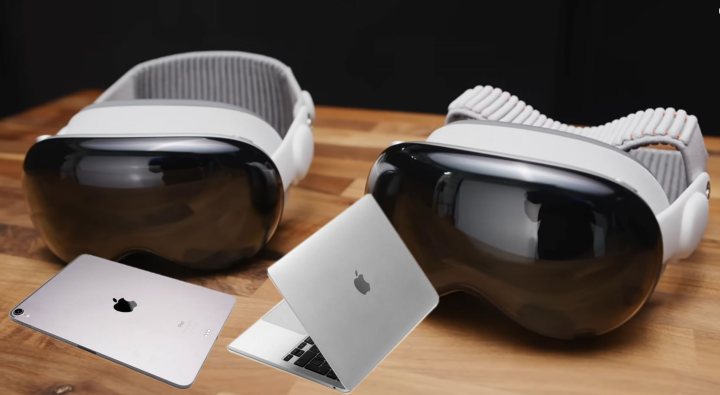
Apple’s M5 silicon is now the brain behind the Vision Pro, iPad Pro, and 14-inch MacBook Pro.
Unlike the Pro or Max chips, this is a base-level upgrade, but it offers:
So yes, the Vision Pro is a little faster and lasts longer, but these are incremental changes, not groundbreaking.
If you expected a lighter or thinner headset, think again. The 2025 Vision Pro still uses the same aluminum frame, micro-OLED displays, and 12-camera sensor array as the original.
However, Apple introduced a Dual Knit Band, a redesigned strap that improves comfort and weight distribution. It’s elegant, adjustable, and better balanced, thanks to a tungsten counterweight at the back.
Fun fact: you can buy this new Dual Knit Band separately for $99, and it fits the older Vision Pro, too.
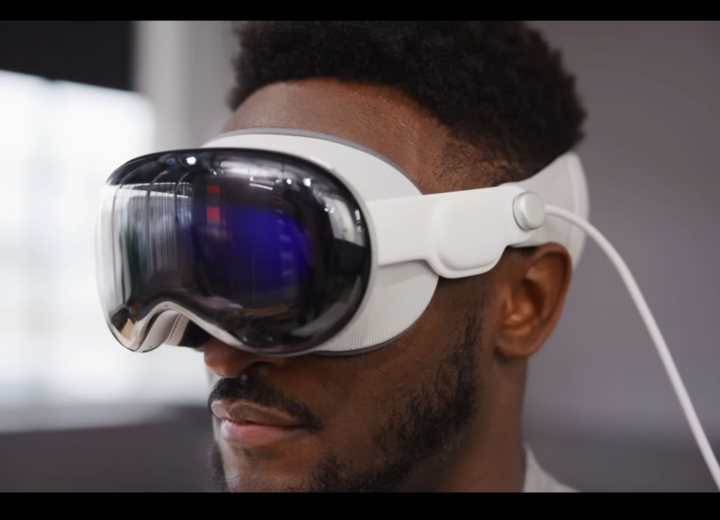
After testing the M5 Vision Pro, users report that:
Still, the visuals and passthrough cameras remain the same. The upgrade is noticeable but far from revolutionary. Think of it as a refined experience, not a reimagined one.
Here’s where things get interesting. Samsung finally launched its Android XR headset, codenamed Project Moohan, entering the same mixed-reality race. Yet, despite this, the competition in premium XR remains surprisingly limited.
Meanwhile, smart glasses like Meta Ray-Ban Displays are progressing faster, offering practical features (music, voice control, camera) in a smaller, socially acceptable form.
It’s clear the race for the “everyday face computer” might not be won by bulky headsets, but by lightweight, AI-powered smart glasses.
With limited adoption and a $3,500 price tag, the Vision Pro seems to be finding its place. Reports suggest Apple may have paused plans for a Vision Pro Air, focusing instead on developing AR smart glasses.
This aligns with the market trend, consumers prefer wearable tech that feels natural, not isolating. Apple might soon pivot toward this more subtle, mass-market future.
Q1: What’s new in the Apple Vision Pro 2025 version?
A: The 2025 Apple Vision Pro introduces Apple’s M5 chip, a redesigned Dual Knit Band for better comfort, and improved battery efficiency. However, the headset retains the same display, sensors, and overall design as the first-generation model.
Q2: Is the Apple Vision Pro 2 lighter than the first version?
A: Surprisingly, the second-generation Vision Pro is slightly heavier due to the metal counterbalance in its new Dual Knit Band, but it’s significantly more comfortable for long-term wear.
Q3: How much does the Apple Vision Pro cost?
A: The new Vision Pro retains its original $3,500 price tag. Refurbished or secondhand units may be available at lower prices through official resellers or platforms like eBay.
Q4: Are there any Apple Vision Pro alternatives?
A: Yes. Samsung recently launched its Android XR headset as a Vision Pro competitor. Other emerging alternatives include Meta Quest 3 and the upcoming smart glasses trend like the Meta Ray-Ban series.
Q5: Can you use FaceTime on the Apple Vision Pro?
A: Absolutely. FaceTime on Vision Pro allows realistic 3D Personas and spatial video calls, making it one of the most immersive FaceTime experiences yet.
The 2025 Vision Pro shows Apple’s commitment to refining its mixed-reality ecosystem rather than reinventing it. The new M5 chip adds small but welcome improvements, smoother visuals, slightly longer battery, and better comfort, yet the real innovation may come when Apple shifts toward lighter, smarter, AR-first glasses.

Latest News: Pastor Chris Oyakhilome, Pastor Bolaji Idowu and Dr. Daysman Oyakhilome Make Headlines as ...[Read more]
Has anyone compared FSA Vs HSA before selecting employee health benefits? I think it is ...[Read more]

In the modern era of streetwear fashion, finding a brand that offers you quality with ...[Read more]
Nigerian Prophet Jeremiah Omoto Fufeyin has once again attracted significant attention online after a prophecy ...[Read more]
Expert Nigerian Political Analyst, Mr URHOBO, Explains Why He Believes Gbajabiamila Is Innocent Nigerian ...[Read more]
Breaking News: "Gbajabiamila Is Innocent" – Daddy Freeze, MC Ezzy and Other Nigerians React to ...[Read more]
Breaking News: 269 More Nigerians Return from South Africa as Federal Government Intensifies Evacuation Efforts ...[Read more]
CBD (cannabidiol) is a naturally derived compound from the hemp plant, valued by those who ...[Read more]
Graphic Design plays a key role in shaping brand identity and audience engagement. It allows ...[Read more]
You can easily enhance your time management skills by following these tips: Instead of managing ...[Read more]
Pre Construction Services: Planning, analysis and coordination that occurs prior to construction of a building. ...[Read more]
CMI students often make mistakes while working on their assignments. The first one is that ...[Read more]
To ensure originality, CIPD students use a variety of programs, including Turnitin, Grammarly, and others, ...[Read more]
Ever stumble upon a game that seems incredibly simple at first glance, but quickly becomes ...[Read more]
Have you ever found yourself needing a quick, satisfying burst of mobile gaming? Something you ...[Read more]
Ever feel like a game is actively trying&...[Read more]

If you've ever wondered what happens when you mix medieval archery with wobbly ...[Read more]
Tired of kart racers where winning depends more on luck than skill? Ready to leave ...[Read more]
The right way to clean a Faux Leather Jacket is by hand-washing or spot-cleaning with ...[Read more]
Word and logic games have become a relaxing way for many people to take a ...[Read more]