General Politics Celebrities Crime Programming Health Business Sports Jobs Music and Videos Comedy Religion How to Live Sports Education
Programming the Unitree G1 Base: A Platform for Robotics Innovation
The Unitree G1 Base, available at ToneArt, is a remarkable tool for programmers and robotics enthusiasts seeking a real-world platform to explore advanced robotics concepts. Unlike simple robotic toys, the G1 Base offers full mobility, multiple degrees of freedom, and a range of sensors including depth cameras, LiDAR, and IMUs. These features make it an ideal environment for experimenting with motion control, sensor integration, artificial intelligence, and autonomous behaviour in humanoid-like robots.
From a programming perspective, the G1 Base is both a challenge and an opportunity. Its advanced hardware requires careful attention to control loops, real-time sensor processing, and system integration. Programmers must understand the robot’s kinematics, joint limits, and movement capabilities to design routines that are both safe and effective. Simple tasks, such as walking forward, turning, or standing up, quickly evolve into complex programming problems when combined with sensor input, environmental awareness, and stability management.
One of the most exciting aspects of the G1 Base is its ability to bridge low-level hardware control with high-level behaviours. Programmers can create motion primitives like walking, jumping, or turning, and then build complex sequences that respond dynamically to the environment. For example, the robot can be programmed to detect an object using its depth camera and navigate around obstacles autonomously. Integrating AI or machine learning models allows the robot to learn new behaviours, adapt to changing conditions, or respond to human gestures, creating a sophisticated interaction loop between the robot and its environment.
Safety and modularity are also essential considerations. Programmers must implement emergency stop routines, collision detection, and real-time monitoring of motor currents and torque. Proper abstraction between high-level task commands and low-level motor control simplifies development and reduces risk. Using frameworks such as ROS or custom middleware can help manage communication between sensors, actuators, and decision-making algorithms, enabling programmers to focus on behaviour design rather than hardware minutiae.
In addition to technical skills, programming the G1 Base encourages creative problem-solving. Developers can experiment with reinforcement learning, computer vision integration, teleoperation, and dynamic path planning. Every iteration of code provides immediate feedback, offering a tangible connection between programming decisions and real-world robotic behaviour. This hands-on experience is invaluable for anyone looking to deepen their understanding of robotics, control systems, and autonomous technologies.
the Unitree G1 Base is more than a robot—it is a platform for exploration, learning, and innovation in programming. By engaging with its hardware and software capabilities, programmers can develop skills in motion control, AI integration, and real-time system management while pushing the boundaries of what humanoid robots can do. For anyone passionate about robotics and programming, the G1 Base offers an unparalleled opportunity to turn theoretical knowledge into practical, observable results.

ProSeries Cloud Hosting offers accountants and tax preparers the ultimate blend of performance, mobility, and ...[Read more]
Get Cheap Suboxone 8mg Film online in USA Whatsapp.+1(862)-294-0647 Xanax 2mg,vyvanse,Oxycodone,...[Read more]
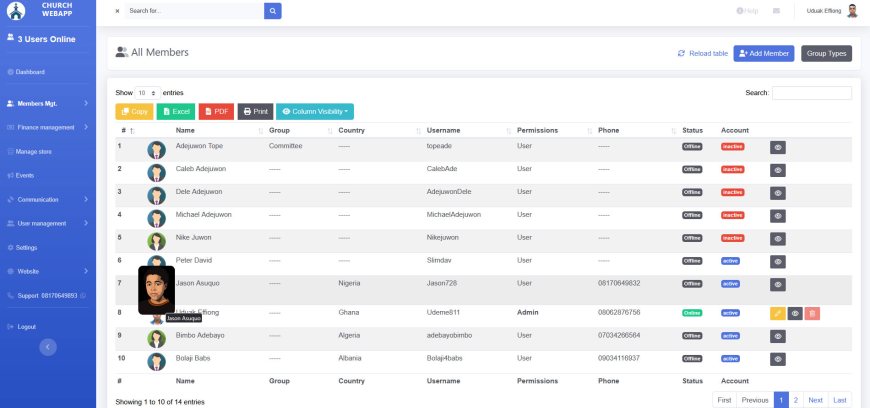
Just completed a full-featured Church Management System for Grace Nation Church. Tech Stack: PHP, MySQL, ...[Read more]
Cutting-edge app development is at the forefront of innovation, and staying updated with the latest ...[Read more]
Agen Judi Togel Online Taruhan Angka 4d Terbaik dan Terpercaya DAFTAR KLIK DISINI SEKARANG DAFTAR ...[Read more]

🔍 Eager to unravel the critical differences between Cloud Transformation and Cloud Migration? Dive into the ...[Read more]
I didn’t think that there will be a time where websites would be ...[Read more]
Creating an effective B2B email marketing strategy for Dubai, or any market, requires a ...[Read more]
You might be looking for a secure and efficient way to automate customer conversations on ...[Read more]
Hi I'm trying to use gtk on linux (ubuntu 20.04). GtkPrintUnixDialog not available on linux? ...[Read more]
Benefits of Python Programming: • Python is Embeddable: There are many advantages of Python ...[Read more]
When using Set_Current_Folder I get a window in which the Folder I enter ...[Read more]

At Oodles Technologies, we deliver customer-centric OTT solutions that are unique and add value to ...[Read more]
I want to set up my software solutions for transportation and logistics management. However, the ...[Read more]
I have a vertical grid of 4 buttons. Clicking on a button adds a grid entry ...[Read more]
I am a student who is doing an internship in a company, for this I ...[Read more]
If you want to Build a Competitive Marketplace App then find the best app development ...[Read more]
Technologies have shaped the entire world differently, and mobile apps stand the first in this ...[Read more]
To build successful software for the client, a software development company needs an incredible team. ...[Read more]