General Politics Celebrities Crime Programming Health Business Sports Jobs Music and Videos Comedy Religion How to Live Sports Education
Unmanned aerial systems like the DJI Mavic 4 Pro offer law‑enforcement agencies, private security teams, and community safety programs a powerful new capability for crime prevention, rapid response, and evidence collection. With high-resolution imaging, long endurance, intelligent tracking, and advanced obstacle sensing, this drone can extend situational awareness, reduce risk to officers and civilians, and improve decision-making during incidents — when used responsibly and within legal boundaries.
When a crime is reported, minutes matter. A quick aerial deployment provides a live, bird’s‑eye view of the scene that ground teams cannot match. The Mavic 4 Pro’s 6K HDR video and telephoto capability let operators identify suspect movements, vehicle locations, escape routes, and potential hazards from a safe distance. Commanders can see crowd behavior, building layouts, and access points in real time, enabling faster, safer tactical choices and better resource allocation.
The drone’s intelligent tracking features (for example, ActiveTrack modes) and long zoom let teams follow suspects or vehicles without direct confrontation. This reduces the need for dangerous ground pursuits and allows officers to maintain a secure perimeter while coordinating intercepts. Thermal or low-light performance (where legally permitted and configured) can also assist searches at night or in poor visibility conditions.
High-resolution aerial imagery captures the spatial relationships of a crime scene — vehicle positions, entry/exit paths, crowd distribution — in ways that complement ground photography. The Mavic 4 Pro’s stabilized gimbal and geo-tagged footage make it easier to produce accurate scene reconstructions, video evidence, and post-incident reports. Properly logged aerial captures can strengthen investigations and court presentations when chain-of-custody and legal protocols are observed.
Regular, transparent use of drones during patrols or public events can act as a deterrent to opportunistic crimes. Seeing an aerial unit in operation — when communicated appropriately to the public — may discourage vandalism, theft, or disorderly conduct. For large venues or festivals, aerial oversight enhances crowd management and reduces the chance that small disturbances escalate.
For private properties, industrial sites, or transportation hubs, drones provide a flexible surveillance layer that supplements fixed cameras. The Mavic 4 Pro’s mobility and endurance allow periodic sweeps of perimeters, hard-to-reach areas, and critical infrastructure without the expense of permanent installations. This makes it useful for night checks (with proper lighting/legal compliance), pipeline or railway corridor monitoring, and temporary security during events.
Drones are powerful but not a panacea. Their use for crime prevention must follow laws, regulations, and departmental policies: airspace rules, privacy statutes, search-warrant requirements, and data retention laws differ by jurisdiction and often require authorization for surveillance or investigative use. Misuse can lead to legal challenges, community distrust, and evidence exclusion.
Operational limitations include battery life (real-world flight time is less than advertised under heavy use), signal loss in urban canyons, and sensor performance in extreme weather. The drone must not be used in ways that endanger people — for example, attempting to physically interdict suspects — and operators should avoid situations where rotor wash could create safety hazards.
Policy and Training: Establish clear SOPs, privacy safeguards, and evidence-handling procedures. Ensure operators are certified and trained in both flight operations and legal/ethical considerations.
Community Engagement: Be transparent about drone programs, including when and why drones will be used. Publish privacy policies and complaint procedures to build trust.
Coordination with Dispatch: Integrate drone feeds into incident command systems so ground units receive timely, actionable imagery.
Data Management: Securely store footage, maintain chain of custody, and adopt strict retention/deletion schedules to meet legal requirements.
Use Cases Definition: Predefine lawful scenarios for deployment — missing persons, active threats, crime scene documentation, event security — and require supervisory approval for investigative surveillance.

Strengthening Law Enforcement and Public Safety Through the Sony ILME-FX2B Law enforcement agencies increasingly ...[Read more]
The Role of DJI Osmo Pocket 3 in Forensic Investigation and Law Enforcement The integration of ...[Read more]
What good does burning their own city down, looting and rioting, acting a fool and ...[Read more]
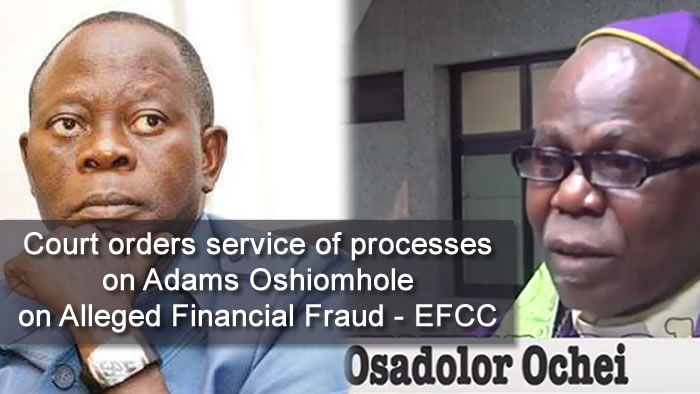
An anti-corruption crusader Bishop Osadolor Ochei sued the National Chairman of APC Adams Aliu Oshiomhole ...[Read more]

Musa Aliyu is the living victim of the gang members who deal in male private ...[Read more]

In Nigeria, President Muhammadu Buhari’s Finance Minister is involved in a fake certificate ...[Read more]
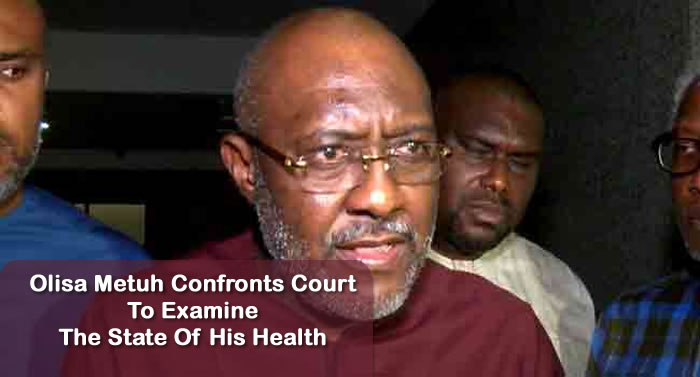
The past National Publicity Secretary of the People’s Democratic Party (PDP) Olisa Metuh ...[Read more]

Four Yahoo Boys have been nabbed by the Economic and Financial Crimes Commission (EFCC), for ...[Read more]
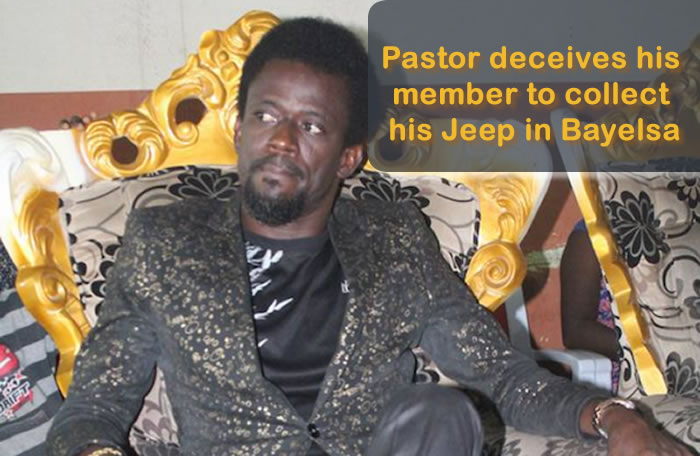
Apostle Kingsley Abiagonohou deceives a member of the church to collect his Jeep and has ...[Read more]
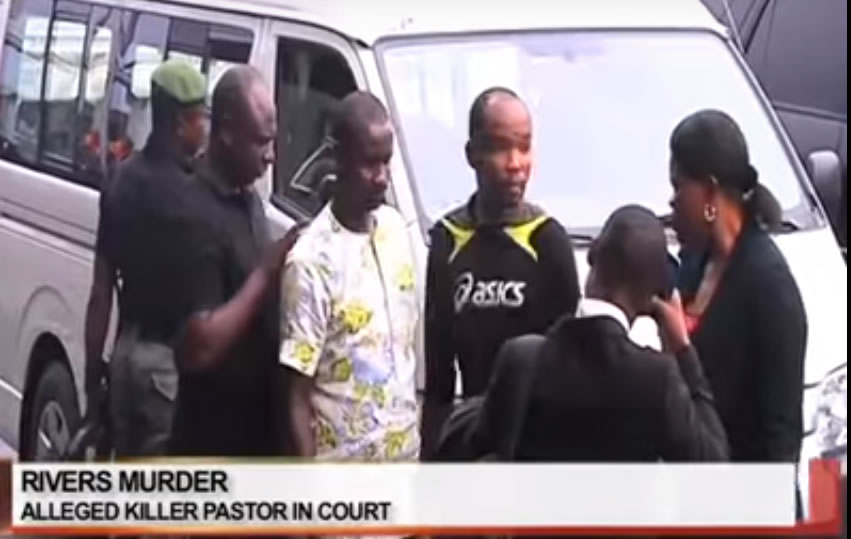
One of the top stories, a chief magistrate court in Port Harcourt has remanded a ...[Read more]
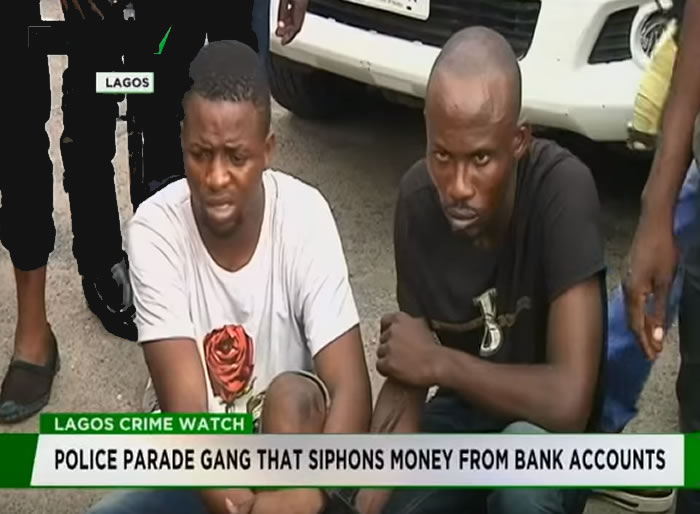
A syndicate describe as digital thieves led by one Muritala Mohammed alias Swallow were amongst ...[Read more]

Security operatives have killed a notorious criminal kingpin allegedly responsible for the death of scores ...[Read more]
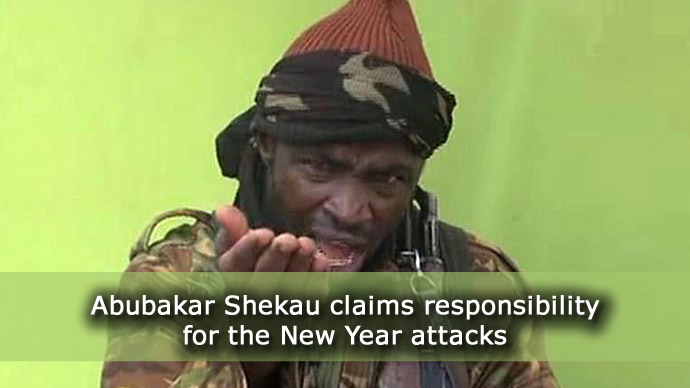
Abubakar Shekau the leader of Boko Haram released a video on Tuesday claiming responsibility for ...[Read more]
Mr. Abdulrasheed Maina, former chairperson of the Presidential Task Force on Pension Reforms has been ...[Read more]